
Understanding Slot RTP (Return to Player)
Slots are popular because they are straightforward betting games that do not demand a detailed strategy. Even so, gamblers should understand several basic ideas before playing online, including Return to Player, or RTP. This guide explains what slot RTP means, how it relates to risk and volatility, and why its percentage should be read as a long-run measure rather than a promise about a particular session.

Key Takeaways:
- The RTP figure estimates how much a slot may return from money wagered on it over time.
- RTP percentages help indicate the theoretical risk associated with online casino games.
- Other considerations matter too, particularly a slot’s volatility.
- Online casino slots commonly sit within an average RTP range of 92% to 97%.
- The game provider sets a slot’s RTP; the casino hosting that slot does not normally set it.
RTP Explained: What is RTP in Slots?

RTP means Return to Player, and it is shown as a percentage. Put simply, this percentage estimates how much of the money wagered on a game may be returned to players over a substantial number of rounds.
For instance, a game with an RTP of 96% is expected to return $0.96 for every $1 bet in the long run. The remaining 4% represents the casino’s theoretical share. That is why RTP is normally below 100%; the difference is known as the house edge.
A slot or casino game with an RTP above 100% would theoretically lose money for the casino on that game. In practice, the house retains the mathematical advantage, so RTP figures are normally below 100%.
Do Other Casino Games Have RTPs?

RTP is not a calculation reserved for slots. Every casino game has its own percentage, including Live Casino such as Blackjack and Roulette. Sports betting, including wagers on horse racing, can also be assessed through RTP. The term is heard more often with slots because their simple mechanics make the calculation easier to explain than in many other casino games.
Other casino games, particularly table games such as roulette, involve several additional details. The house edge, probabilities and odds can all matter, and some of these figures change according to the bet selected. As a result, applying the RTP concept to these games is less immediately straightforward.
Overall, European Roulette and Classic Blackjack are table games commonly associated with relatively high RTP values. Players who prefer table or live casino games to slots may therefore wish to compare these options.
Does RTP Matter in Slots?
RTP matters because it provides a theoretical indication of a game’s risk and can support more informed choices. For example, a slot advertised with an RTP of 97% has a higher long-run theoretical return than one with an RTP of 89%, although neither figure predicts the result of a particular spin.
It is important to remember that RTP is calculated across a large sample of betting rounds. Therefore, a slot with 96% RTP will not take exactly 4% of every wager on every round. Individual wins and losses can be substantially above or below that percentage.
RTP is best understood as a long-run comparison of theoretical odds. A higher-RTP slot may be the more favourable mathematical choice than a lower-RTP slot, but there is no guarantee that it will pay more during any individual round or short session.
RTP alone does not describe everything relevant about a slot. Other characteristics also affect how the game feels and how results may be distributed, with slot volatility being one of the most important.
What is the Difference Between RTP and Slot Volatility?
Slot volatility describes the size and frequency of potential wins. High-volatility slots tend to produce less frequent wins with larger possible payouts, while low-volatility slots generally offer more frequent payouts that are smaller.
A slot with an RTP of 95% may have either high or low volatility. That is why its RTP cannot tell you what an individual betting session will produce. Volatility is sometimes described as the way a game distributes its Return to Player value, offering another perspective on the relationship between the two measures.
The practical point is that assessing a slot’s theoretical prospects requires both RTP and volatility. RTP indicates the long-run return, while volatility helps explain how wins may be spread across play; neither one guarantees a winning result.
Types of Slot RTPs
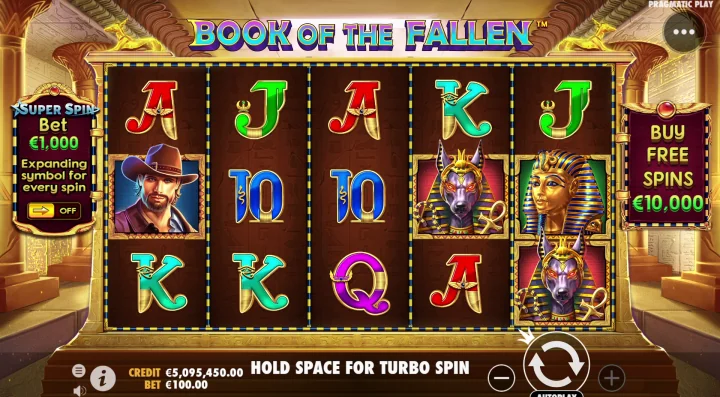
The provider behind a slot determines its RTP, rather than the casino that makes the game available. Most online slots have a Return to Player figure between 92% and 97%, although some games sit above or below that range.
As a broad classification, a low-RTP slot falls between 90% to 93%. Medium-RTP games are generally between 94% and 96%, while a high-RTP slot is 97% or higher but still below 100%.
Choosing an RTP can be a balancing exercise. If it is set too low, attracting players may become difficult. If it is set too high, the casino may find hosting that game less commercially viable.
Slot providers therefore need to set RTP levels strategically, balancing the expectations of players with the commercial considerations of the casinos that host their games.
Software providers must also weigh RTP against a slot’s other features. A game with a lower RTP may still attract attention through low volatility and frequent bonus features that give players more regular activity.
How Do I Choose a Slot Based on RTP?
RTP is not the only factor behind a slot’s results, but a higher-RTP game is generally preferable on mathematical grounds to a lower-RTP alternative. After comparing the percentages, consider the following characteristics when selecting games, rather than treating them as a guaranteed strategy:
- Pick the right volatility: High-volatility games may suit players seeking larger potential wins who have a bigger budget and accept heavier risk. Low-volatility slots may be more suitable for beginners, casual gamblers or anyone with a limited budget who cannot afford substantial losses. There is no universal choice: the appropriate volatility depends on personal preferences and circumstances.
- Pick a game that offers bonus rounds: A slot’s mechanics can influence its potential outcomes. Bonus rounds may create additional winning combinations and provide further ways to continue playing. It can therefore be useful to check which casino games include these rounds, while remembering that they do not guarantee a win.
- Take a look at the paytables: Paytables explain the winning combinations available in an online slot and the amount associated with each one. Reviewing them before playing helps clarify the game’s potential payouts. Since combinations can differ considerably in value, examine the full paytable rather than only its headline feature.
- Check if there are any other bonus features: Alongside bonus rounds, online slots may include features such as scatters or wilds. These can change how combinations are formed and add another layer to the gameplay, but they do not ensure a win. Progressive jackpots are another feature players may want to investigate because they can provide larger potential prizes.
- Don’t settle for the first slot you see: Online casinos provide a broad selection of games, so it is worth comparing several rather than choosing the first one encountered. Review the published statistics, then use a slot’s demo version, where available, to see how its stated RTP and volatility are presented in the game.
Slots With Outstanding RTP Values
The article highlights the following games as slots with RTP figures above the stated average range, available through top online casinos. This is a description of their published RTP positioning, not a promise that either game will win for an individual player.
🎰 Slot 💻 Provider 💰 RTP Book of 99 Relax Gaming 99% Marching Legions Relax Gaming 98.1% Steamtower NetEnt 98% Blood Suckers NetEnt 97.9% Heimdall’s Gate Kalamba Games 97.8% Polar Paws Quickspin 97.8% Quest to the West Betsoft 97.5%


How Does RTP Affect the Overall Gameplay?
RTP does more than provide a theoretical estimate of a game’s overall risk; it can also inform how players think about a slot. For example, the way you manage a bankroll may depend partly on the RTP of the game selected.
A high-RTP, low-volatility slot is generally associated with smaller but more frequent payouts. Understanding the possible pattern of results can help you decide how to allocate a gambling budget. A clear grasp of RTP may consequently support more responsible play, but it cannot remove the risk of loss.

How do I Determine Slot RTP?
Online platforms commonly publish slot RTP information, so checking it before betting is a sensible step. Casino websites often include the RTP for the slots they provide, although the exact information available can vary by game and operator.
At GCCans, you can review the RTP information for slots covered on the website. Details about an online slot may also include its bet sizes and variance, giving readers more than the percentage alone.
Slot RTP Values: Myth vs. Fact
Because RTP is an important part of slot mathematics, several myths have developed around it. The following points examine common claims people hear about casino slots and distinguish the claim from what the RTP calculation actually says.
🧙♂️ Myth Number One: RTP values don’t matter in individual sessions.
✅ Fact: That statement depends on what “matter” means. RTP does not determine the result of each individual round because it is calculated over a large number of betting rounds. Consequently, an individual session or a few rounds of wagered money may finish above or below the stated RTP.
That limitation does not make RTP irrelevant. Over the long run, a high-RTP casino game has the more favourable theoretical return, while an individual session can still end in either a win or a loss. A higher percentage is not a short-term guarantee.
🧙♂️ Myth Number Two: Casinos can manipulate the RTP values in a game.
✅ Fact: Frequent references to the “house edge” have led some people to assume that casinos alter slots so winning becomes impossible. The existence of a house edge does not, by itself, support that conclusion.
The house edge is a mathematical feature. A casino operation is a business, and businesses seek revenue, so each casino will aim to operate profitably. That commercial objective does not mean every casino game relies on deception or manipulation.
Slot games are created and owned by their developers, who set the RTP. The casino generally has no say over that core setting. This claim is often directed at online casinos, but their games are commonly hosted directly on the developer’s servers.
Even if a casino wanted to alter a slot’s RTP, it would not ordinarily have the necessary core controls. Those controls belong to gaming providers. If one slot appears with different RTP values at different casinos, the likely explanation is that the provider supplies the same game in several RTP configurations.
🧙♂️ Myth Number Three: Streamers play the same slot games at higher RTP levels.
✅ Fact: Streamers are people who broadcast themselves playing games, often through platforms such as Twitch. Online gaming has led to more streaming activity because this kind of content attracts substantial engagement.
Streamers frequently promote particular casinos under sponsorships or other marketing arrangements. That visibility can lead viewers to suspect that streamers receive higher RTP settings than ordinary players.
This returns to the point that casinos do not generally control a slot’s RTP. A streamer may appear to win more often than a typical player, but they may also spend several hours a day gambling because it is their career. They could also select higher-RTP slots specifically when promoting a casino.
Some casinos may additionally provide loyal streamers with special bonuses under a marketing agreement. Those bonuses can increase the streamer’s potential winnings, but they may function as compensation for advertising the casino to a substantial online audience.
Land-Based Casinos vs. Online Slots: Where is the RTP Higher?

Online slots generally tend to show higher RTPs than slots in physical casinos. The average RTP for land-based slots is often described as between 70% and 90%. For online slots, that would be an unusually low range because many stated RTP values fall between 92% and 97%.
The difference is linked to operating costs. Land-based casinos must maintain large slot machines and have limited floor space for the games they can offer. Those constraints mean land-based slots require a higher house edge to remain commercially viable for the casino.
Online casinos do not face the same physical restrictions. Some online casino sites host thousands of slot games simultaneously. With so many alternatives available, a slot carrying an extremely low RTP may attract little attention and therefore receive fewer wagers.
Final Thoughts
Return to Player percentage is one of several useful indicators when comparing the theoretical odds of slot machines. RTP is relevant to both newcomers and experienced players, but it cannot predict a particular outcome. Before betting, look up the slot’s RTP, consider its volatility and decide whether the game fits your budget and preferences.