Interview with Print Studios: Slot Features, Mechanics & Innovation
Print Studios has drawn notice in the slot sector for its inventive mechanics, striking visual style and distinctive approach to play. Royal Potato and Holy Hand Grenade are examples of the studio’s offbeat catalogue and its effort to make games that feel different from familiar releases.
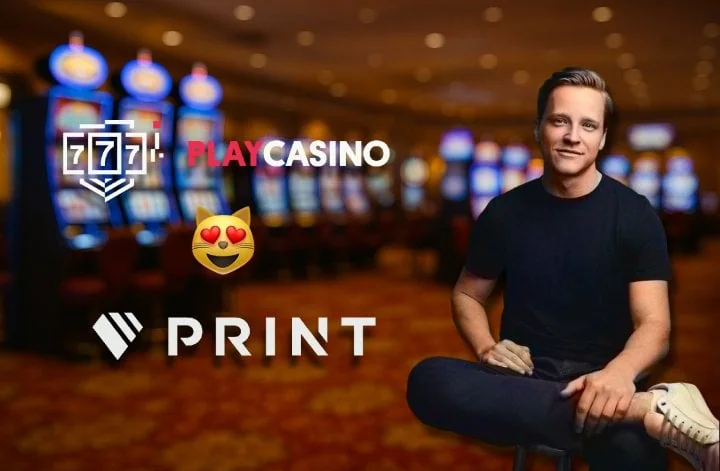
In this interview, Filip Wargéus, Print Studios’ Chief Commercial Officer, discusses the ideas and processes behind the studio’s games, the sources of its creative direction and its decision to follow a distinct path in the industry.
Q. What was the original idea behind Print Studios, and how has that vision changed since the beginning?
From the outset, we wanted a studio built around care and quality, with enough room to make games we stood behind. The aim was to move away from a production-line approach and give each release its own character. The founding idea remains, though our approach has matured: we now plan more deliberately, have gained experience and can grow our work at a larger scale. Making strong games without compromising that ambition still guides us.
Q. How do new game ideas usually start at Print, from data, from team creativity, or somewhere unexpected?Ideas can come from a few places.
Market and player data can point to a popular mechanic or an area with room for something new. More commonly, an idea begins with someone on the team: perhaps a visual, an unusual way to play or a theme worth exploring. We leave space for those less expected starting points.
Q. In your About Us, you say a game is only as good as its weakest link. How do you make sure everything - art, math, mechanics, sound - works together?
Close teamwork and a shared process help keep the parts aligned. The team brings mathematical design and visual work together from the beginning, rather than treating either as an add-on. Each part should serve the central game idea: when the mechanics feel intense, the sound and artwork need to support that mood. We revisit the work often and speak plainly when an element needs to change.
You don’t make branded, seasonal, or trend-chasing slots. Is that a creative decision, or part of a bigger plan?
It reflects both creative priorities and business thinking. We want to make original games with staying power instead of releases tied to a brief burst of attention. Building our own intellectual property is a longer-term investment, while a trend can lose relevance within six months. For us, the two aims point in the same direction.
Q. Who is your target audience - are you building games mainly for experienced slot players, or trying to reach a wider crowd?
We mainly have experienced slot players in mind: people familiar with volatility who want more depth in the play. At the same time, we want interested newcomers to be able to follow along. The design challenge is to offer layers for seasoned players while keeping the experience clear enough for people just starting out.
Q. Do you design with certain markets or regions in mind, or do you aim to build something that works everywhere?
Regional tastes matter to us. Preferences around mathematical models, themes and interface design can differ from place to place. Even so, we aim for games with broad appeal, built on engaging mechanics, confident art direction and a clear player experience.
Q. If you had to pick the top 3 games that represent the “Print Studios identity” best, which would you choose, and why?
- Royal Potato – Its oddball premise is part of its appeal. The mix of comedy and high-volatility play captures a lot of our character.
- Out of the Ice – This one shows how we approach visual direction and world-building, alongside gameplay that develops in layers.
- Holy Hand Grenade – It brings together assertive artwork, mathematical design and a balance of disorder and control. It feels like a defining statement from the studio.
Q. Your games mix serious, intense design with fun and humor. How do you find the right tone for each one?
We start with the central mechanic and consider the mood it creates during play. That helps determine whether a game calls for tension and atmosphere or something more playful and absurd. Humour should arise naturally rather than being added for its own sake, and we try to balance attention to craft with a willingness not to take ourselves too seriously.
Q. Has there been a project or feature that didn’t work out the way you expected, and what did you learn from it?
Yes. One early feature seemed promising in theory but became too complicated once it was part of the game. That experience taught us to pay closer attention to pacing. A clever idea still has to be enjoyable in practice, so we now give that question weight when shaping prototypes and testing features.
Q. If there’s one thing you’d change about the slot industry right now, what would it be?
I’d like to see more original thinking. When studios copy familiar formulas or concentrate on short-term results, distinctive ideas can get crowded out. Taking creative chances and developing a recognisable identity could give more room for new work to stand apart.
Q. What can players expect from Print Studios in the near future - any exciting plans or upcoming games you can share?
The studio described several releases in development, including mechanics it had not explored before and themes that would take its work in new directions. Without giving away specifics, the stated focus was on energetic gameplay, distinctive artwork and experiences that feel individual to Print Studios.
With 12+ years of experience in the iGaming industry, Evan specializes in reviewing online casinos, analyzing slot games, and evaluating player safety. Their expertise covers casino licensing, RTP, volatility, bonus conditions, and withdrawal policies. Through hands-on testing and independent research, Evan delivers transparent, fact-based reviews to help players better understand gambling platforms, their features, and potential risks.